From The Witness
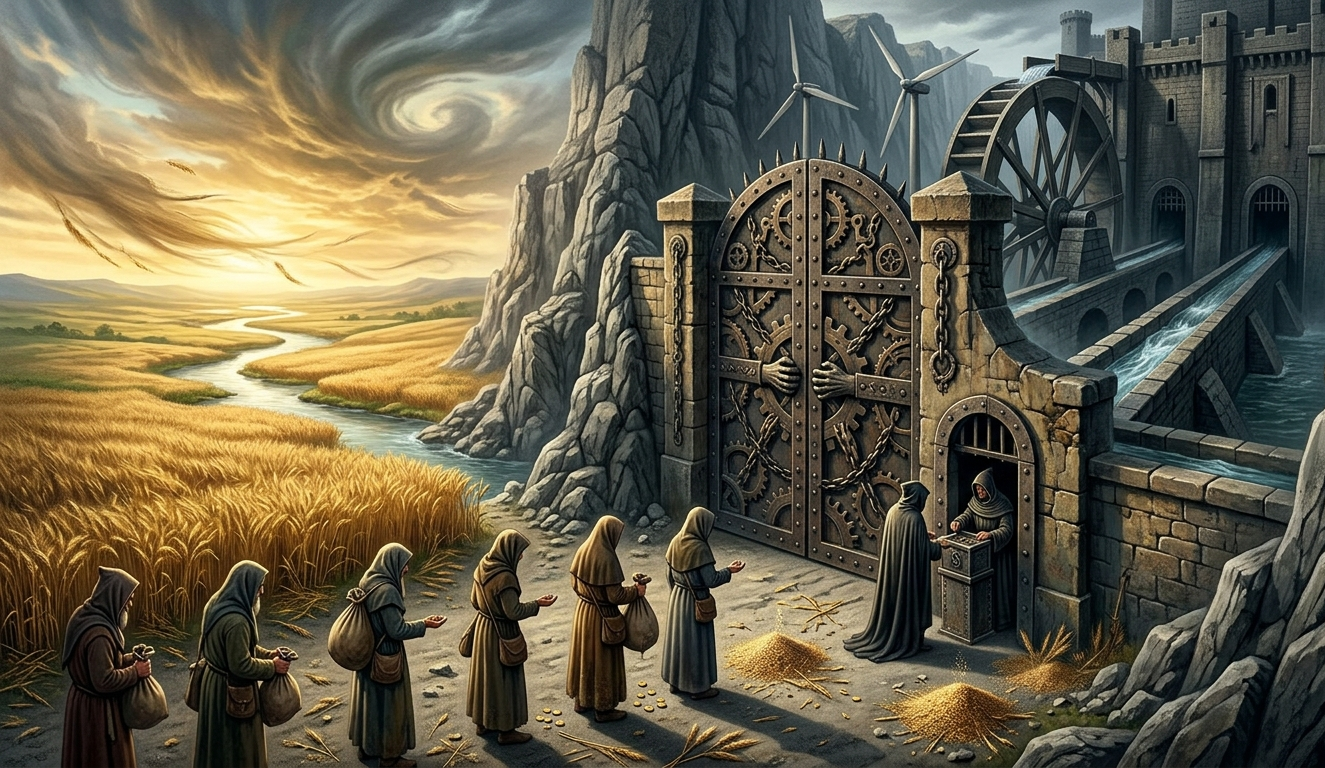
Before the first monopoly on salt there was a prior and more fundamental enclosure that most histories of power skip over.
That is because it happened so slowly, and so early, and so completely,
that by the time anyone thought to notice it, the gate had been standing for centuries and everyone had forgotten there was ever a time before the gate.
The power to move things was free.
Not in the sense of abundant or convenient.
In the literal sense that it belonged to no one and anyone could reach it. The wind that filled a sail. The water that turned a wheel.
The sun that ripened the crop.
The muscle of a person or an animal that could be fed from the land.
These were the energy sources of most of human history, and they were ambient, which is the critical word: they moved through the world without anyone’s permission, they did not come from a gate, and no one could charge for them simply by standing in their path.
Then someone built the mill.
The mill is the first energy wall in the historical record.
It is worth understanding precisely what the mill owner sold.
Not the wind itself, which was still free.
Not the water, which was still flowing.
What the mill owner sold was access to the mechanism that converted the ambient power into useful work.
The grain could not be ground without the mechanism, and the mechanism was owned.
The lord of the manor who owned the mill did not own the wind or the water. He owned the only available means of touching them.
The difference between owning the power and owning the only gate to the power is, from the perspective of everyone who needed bread, no difference at all.
You paid the toll or you ate the grain whole.
Run that move forward and you have the entire history of energy.
Coal was not ambient; it had to be dug, which meant it had to be owned. Then the person who owned the seam for coal owned the heat of every home and the fire of every factory that burned it.
Oil was the same, buried, concentrated, ownable before it was even found. Which is why the first thing that happened when oil was discovered was the legal scramble to establish who owned the ground it sat under.
Next is the story of oil in the twentieth century is the story of the energy wall in its most naked modern form: every coup, every war, every manipulation of a government that this book has attributed to protecting the machine’s interests was, at its root, a fight over who controlled the gate to the thing every economy could not refuse.
Now notice what happened when the ambient sources came back.
Solar panels, wind turbines: they collect power that moves through the world without anyone’s permission, the same wind and sun that turned the mill.
And the first instinct of every incumbent energy interest, documented in their own lobbying records and their own internal strategy papers, was to build a gate in front of the ambient source before it could be accessed directly.
The utility that owns the grid charges for transmission.
The regulatory body whose commissioners came from the industry it regulates sets the terms of connection.
The patent on the panel technology constrains who can manufacture it and at what price.
The ambient power is still free.
The gate in front of it is not, and the gate is the whole game.
The same now as it was when the first mill owner collected his toll and the grain was ground on his terms or not at all.
The word mill reaches back through a root that meant to grind, to crush. What was being ground was not only the grain.
It was also the independence of everyone who needed it, ground down to the size of the toll the mill owner decided to charge that season.
> To the top of the ladder: what ambient resource, what thing that moves through the world without your having made it or earned it, have you built a gate in front of, and what do you call the toll you collect to make it sound like a service?
>
> To everyone else: what power source are you paying for access to that the world is providing for free, and who built the gate you are paying to pass through, and when did you agree that they should be the one to build it?