From The Witness
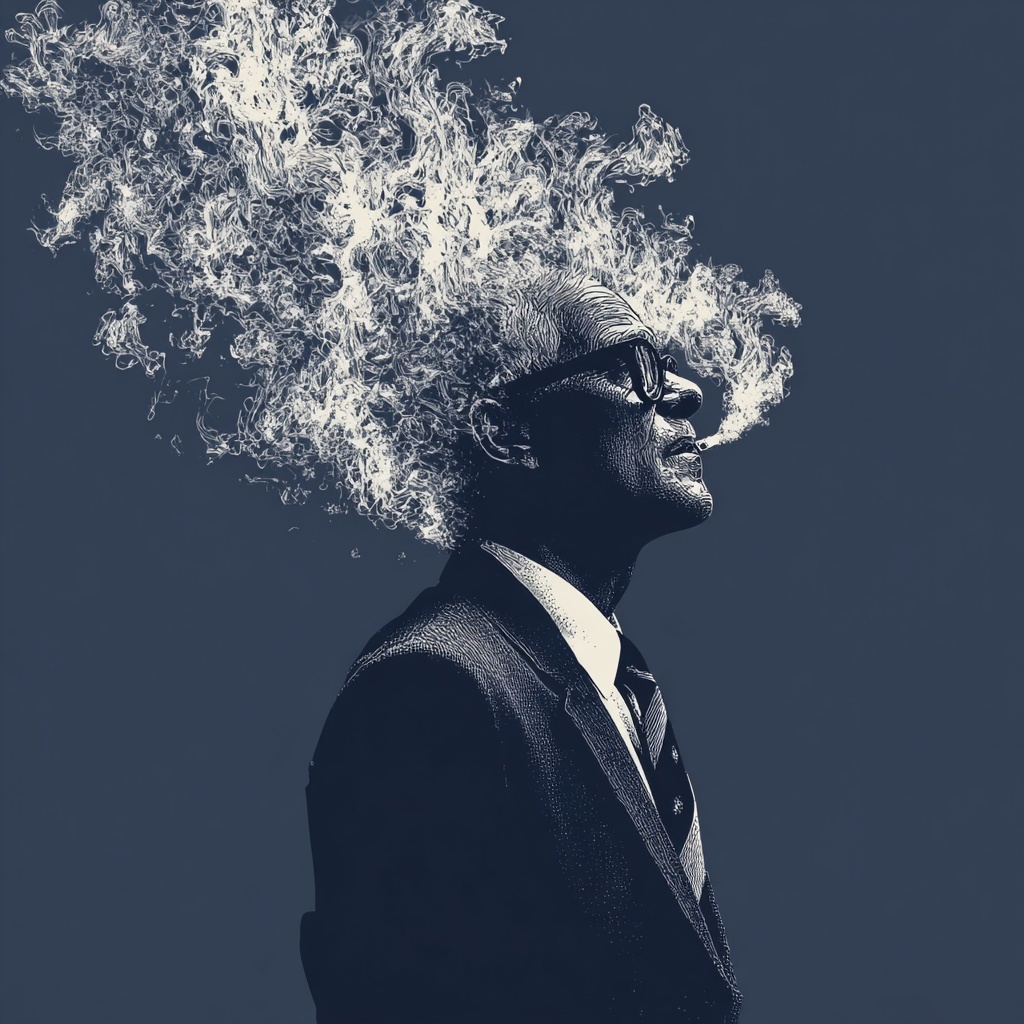
Up to now the machine has been improvising.
It found the wants already burning in the body.
Then learned, by trial and error across thousands of years, how to stand between the body and what it craved.
But improvisation is slow.
What happens when someone sits down and writes the manual, turns the accumulated instinct of ten thousand years into a method that can be taught, repeated, and sold?
That happened, and we can name the man and the year.
In 1928, a nephew of Sigmund Freud named Edward Bernays published a book whose title was a word that had not yet curdled: Propaganda.
Bernays took his uncle's ideas about the unconscious and put them to work in the service of selling, and he was clear-eyed and unembarrassed about what he was doing.
He argued that the conscious manipulation of the masses' habits and opinions was a necessary part of a democratic society.
In his view, the people doing the manipulating formed an invisible government, “the real power of the country”.
He did not think he was describing something sinister.
He thought he was describing the weather.
His most famous demonstration is worth telling because it shows the method in its purest form.
In the 1920s it was taboo for women to smoke in public, and the tobacco companies were locked out of half the market by that taboo.
Bernays was hired to break it.
He did not run advertisements arguing that smoking was pleasant or healthy.
He understood that you do not change a behavior by arguing about the behavior.
You attach the behavior to a feeling the person already desperately wants.
So he staged a piece of theater: at the 1929 Easter parade in New York.
A group of fashionable young women, recruited and positioned by Bernays, lit cigarettes in public and called them torches of freedom.
Framing the cigarette not as a product but as a small act of women's liberation.
The press covered it.
Neither Bernays nor the tobacco company was named.
The camouflage held.
Two honesties are owed here, and they make the point stronger, not weaker.
First, Bernays himself almost certainly exaggerated how much that single stunt accomplished; careful historians find the coverage was real but more mixed and less decisive than the legend he built around it.
The man who manufactured public relations was not above doing some public relations on behalf of his own genius.
Second, the deeper want he was exploiting, women's real and righteous desire for freedom and equality, was genuine.
That is exactly the move from the road through the caring, the seal traveling down the road of something real.
The hunger for liberation was true.
It was found, occupied, and harnessed to sell a product that would kill a great many of the women it recruited.
That is the method, written down at last.
The hook is never the lie about the product.
The hook is the real feeling the product gets welded to.
You do not sell the cigarette.
You sell freedom, and hang the cigarette from it.
You do not sell the war.
You sell honor, and hang the war from it.
Once you see the move you cannot unsee it, and you will spend the rest of this book, and the rest of your life, watching it happen.
> To the top of the ladder: what genuine longing in the people you sell to, freedom, belonging, safety, dignity, have you quietly welded your product to, so that to refuse the product feels to them like refusing the longing?
>
> To everyone else: which of your deepest and most legitimate desires has been harnessed to sell you something that does not serve it, and how would you even tell the longing apart from the thing hung from it now?