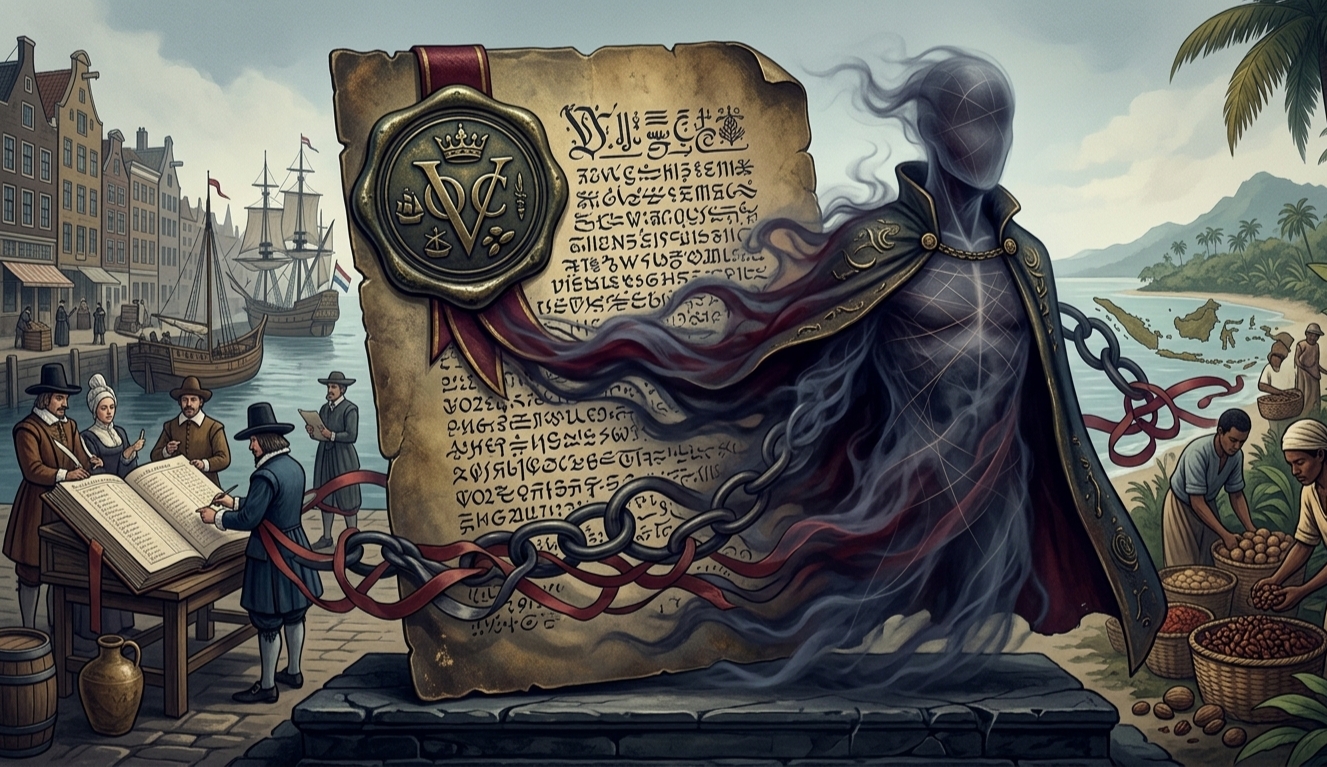
Once you can write the arrangement down, the next move is to make it unquestionable, and the cleanest way to make an arrangement unquestionable is to claim it was not made by anyone at all. Not chosen. Ordained.
This is the seal pattern from earlier, grown up and put in charge of nations. The pharaoh is not a strong man who took the throne; he is a god, or the son of one, and the flooding of the Nile that feeds the whole kingdom is bound up with his divinity. So much so that to question his rule is to threaten the harvest itself.
The Chinese emperor rules by the Mandate of Heaven, a cosmic warrant that explains both why he holds power and, conveniently, why whoever displaced the last dynasty was permitted to do so. The European king rules by divine right, his crown placed on his head by a church that derives its own authority from the same heaven it is invoking. Different continents, different centuries, no contact between them, and the identical move surfaces in each: the people at the top of the arrangement did not climb there.
They were placed there, by something too high to argue with.
Notice what this does to a question. If I ask why the grain goes to the palace, and the answer is that “the king is strong and his soldiers will hurt me”, then I have been given a fact about power, and facts about power can change.
Soldiers can be persuaded, or outnumbered, or simply die. But if the answer is that the grain goes to the palace because the order of the cosmos requires it, then my question is no longer a practical one.
It has been turned into a kind of blasphemy.
I am no longer a person asking where the food went. I am a person attacking heaven, and thus the people around me. The people who also need the harvest and who fear the gods, those people will help to silence me. Because I have been made to seem like the threat.
The seal does not merely refuse the question. It turns the crowd against the one who asks.
This is worth saying carefully, because it is easy to mistake for an attack on faith, and it is not one. The people who believed their king was divine were not fools, and the awe they felt looking at the ordered heavens was real. The same real hunger we met in the seal post. The trap is never the belief. The trap is the splice, the moment the genuine awe at the cosmos is welded onto a perfectly mundane question about who controls the surplus. A seed of trust so that the mundane question inherits the untouchability of the sacred one. Pull the two apart and the belief survives intact while the arrangement loses its armor.
That splitting, that refusal to let the sacred be used as a shield for the ledger, is the single most dangerous thing a person inside one of these systems can do.
Which is exactly why every such system reserves its worst punishments for people who spread a logical question.
The word mandate comes from the Latin mandatum, a command, a thing handed over to be carried out, from manus, hand, and dare, to give. Something placed in your hand by another. The mandate of heaven, the divine right, the god-king: all of them are claims that the power was placed in the ruler’s hand from above.
The question the seal exists to prevent is the simplest one there is. Whose hand, really, and how would we ever check?
To the top of the ladder: What part of your authority have you wrapped in words like “inevitable,” “market forces,” or “the way it’s always been done,” precisely because you cannot afford to let your people realize you are just a person making a choice?
To everyone else: Whose policy have you been treating like a law of nature, and what shifts inside you the moment you look past the cosmic story and realize it is just an arrangement made by ordinary hands, hands no bigger than your own?
Chapter Comments
Reading-only view here. Join or reply in the full forum thread: Open Discussion
No comments yet for this chapter.