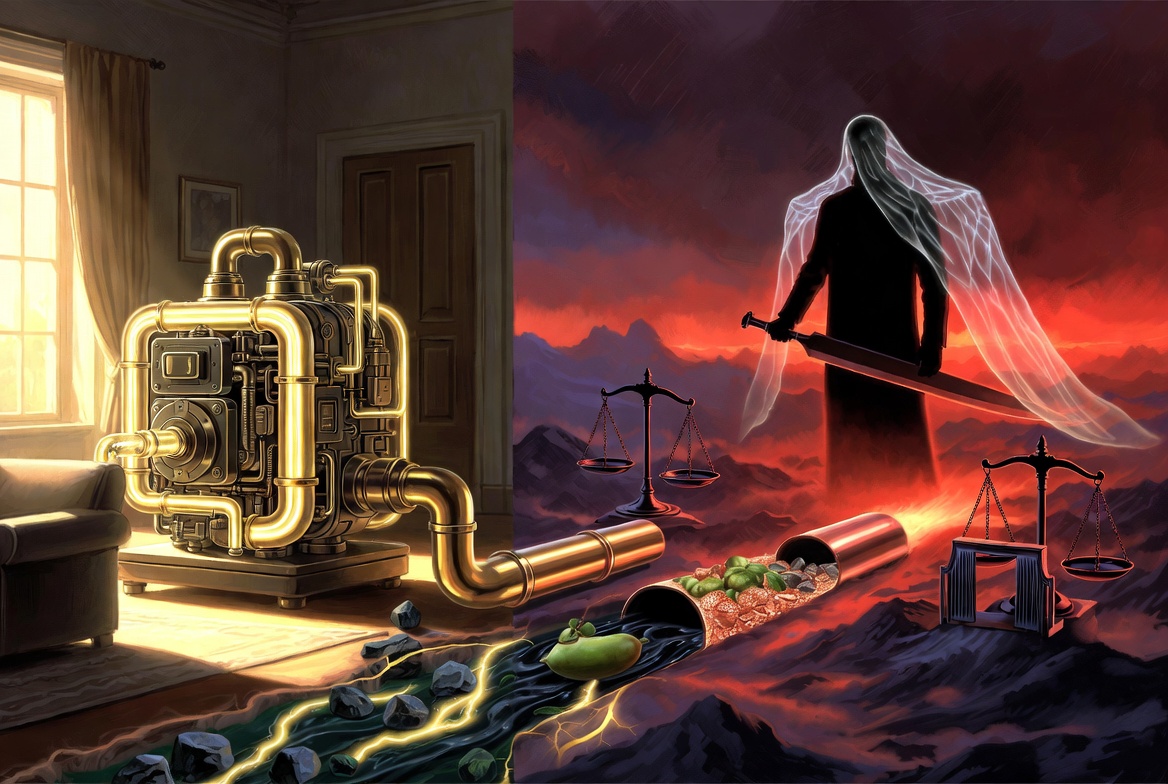
A host offers the machine friction-free operation at home. But the machine’s routes run through other countries. Countries with their own people, their own governments, usually with their own ideas about who should benefit from their own resources.
When one of those governments starts to push back, starts to become friction, something has to remove the friction. That something is the enforcer. For the era of the American host its most documented instrument was the Central Intelligence Agency. Doing abroad what the machine has always needed done: making the resistance disappear.
These are not theories. They are declassified, acknowledged, in rare cases formally apologized for.
In 1953, Iran had a democratically elected government that moved to nationalize its oil. That is, to direct the profits of Iranian oil toward Iranians rather than toward the British company extracting it. American and British intelligence organized the overthrow of that government and restored an autocratic monarch. The CIA’s own historians have since acknowledged the agency’s central role.
In 1954, Guatemala had a democratically elected government that moved to redistribute uncultivated land. Much of the land held by a single American fruit corporation was being redistributed to landless peasants. It too was overthrown in a CIA operation, and the public was exploited by a propaganda campaign run, as it happens, by an outfit connected to Edward Bernays, the man from the science of the hook post. The engineering of consent applied to the destruction of a democracy.
In 1973, Chile’s elected government was destroyed in a coup the United States worked to encourage and support. Replacing it with a dictatorship that tortured and murdered its way through a generation.
Notice the pattern under the three, because the pattern is the whole point and it is older than any of them. In each case a government tried to direct its own country’s wealth toward its own country’s people. In each case that redirection threatened a specific extractive interest: oil, fruit, copper. And in each case the resistance was removed and renamed: the elected leader recast as a tyrant or a communist threat, the coup recast as a liberation, the story sealed with exactly the move the god-kings made, so that the protection of a corporation’s margin could wear the robes of a crusade for freedom.
This is the gunboat from the opium war, modernized. The moral argument was on the side of the people who wanted their own resources. The force was on the other side. The force won, and then wrote the history, and for decades the history held, until the documents came out.
To the top of the ladder: when people organize to direct their own resources toward themselves rather than toward you, what do you call them in public, and how different is that word from the truth you know in private?
To everyone else: which liberations were you taught to cheer that turned out, when the files opened, to be the removal of a people’s attempt to keep what was theirs, and how long did the story hold before it cracked?
Chapter Comments
Reading-only view here. Join or reply in the full forum thread: Open Discussion
No comments yet for this chapter.