
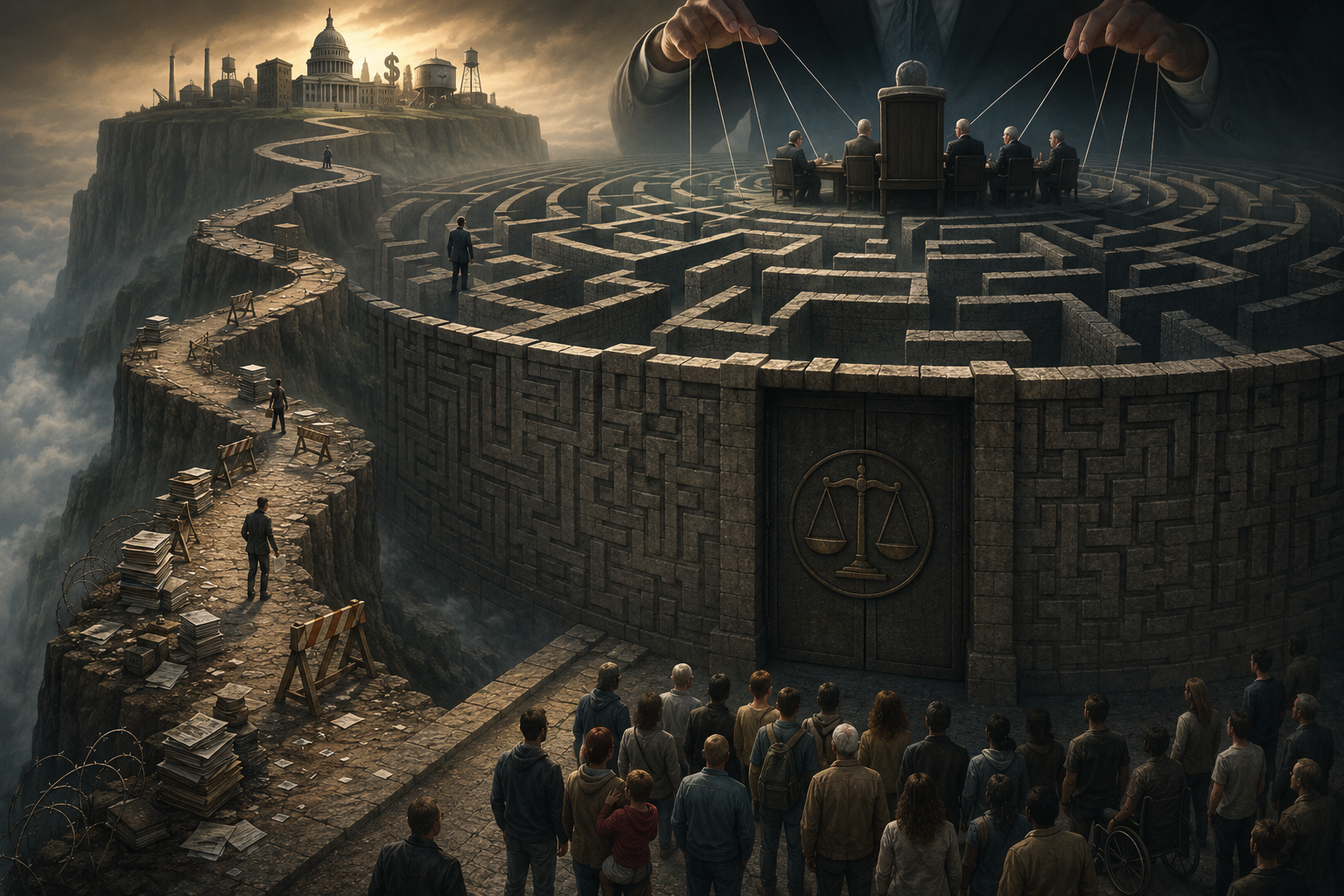
The room before the room described in the previous post is where decisions are shaped before they reach the public vote. This post is about the room after the room: the place where the decision, once made, is made inaccessible to challenge.
When public pressure exposes a gap between a system's promises and its actual conduct, the institution responds with a reliable, calculated defense. It creates an oversight body. It establishes a regulatory framework. It convenes an ethics committee. These institutions look, from the outside, exactly like accountability. They are named as accountability. They are celebrated as accountability.
And they function, structurally, as a buffer: acting as a technical barrier between the actual harm and the people suffering from it. Because it is written in complex legal jargon, it effectively prices everyday people out of the system. Requiring an expensive expert just to have a complaint heard. The ordinary person who has been harmed can no longer say this is unfair in a forum that counts. They are told they lack the standing, the expertise, the filing procedure, the appropriate channel. To be heard, your grievance must be translated into the system's legal jargon. This requires an expensive expert and years of processing time. Worse, the final verdict won't even decide if your harm was real; it will only decide if the correct procedures were followed.
The harm, if it was real, happened to a body, a family, a community. The finding, if it comes at all, happens to a regulation. The gap between the two is the buffer layer's primary product. This is the wall made of procedure. It does not block access to justice by denying it. It blocks access by making the path so long, so expensive, so technically complex, and so disconnected from the actual experience of harm that most people exhaust their capacity to pursue it before they arrive. The machine does not win most of these cases. It wins by making most cases never filed, and most of those filed, abandoned.
The regulatory capture described in the room before the room and the phone posts is the front end: the people who write the rules come from the industry the rules are supposed to govern.
The buffer layer is the back end: the rules, once written by the industry, are enforced through procedures that the industry's lawyers have spent decades making as expensive and slow as possible for anyone who is not the industry. The two mechanisms work together. The front end ensures the rules have the right holes in them. The back end ensures that finding the holes is beyond most people's reach.
The resolve is the one the labor movement found a century ago and the one the buffer layer is specifically designed to prevent: the individual cannot afford the credentialed translator, so the individuals combine and afford one together. The buffer layer privatizes complaint by pricing it past the reach of any single person. The class action, the union grievance, the tenants' association, the cooperative legal fund, the mutual aid network that keeps a lawyer on retainer for all its members, each of these defeats the buffer the same way: by aggregating the many small grievances the system counted on staying separate and unaffordable into one large grievance that can pay for the translator, outlast the delay, and survive the expense the system engineered to exhaust the lone complainant.
This is the collective brake applied to the courtroom and the regulatory hearing. The machine made the path too long and too costly for one person to walk. It cannot make it too long for a thousand people who have pooled what each could not spend alone. That is why the buffer layer's quiet companion is always the rule that makes collective action harder. They rely on mandatory individual arbitration and bans on class actions to break groups apart. It's a deliberate strategy: the people who built the moat know exactly what crosses it, so they ensure people feel like they have to face it alone.
The word regulation comes from the Latin regula, a rule, a straight edge, something used to make lines true. The buffer layer is what happens when the straight edge is calibrated by the people whose conduct it is supposed to measure.
To the top of the ladder: how much of your arrangement's protection comes not from the rules being on your side but from the process of challenging you being expensive enough that most people never finish the journey, and how much of that expense did you help engineer?
To everyone else: what harm have you not pursued because the path to pursuing it required a credential you did not have, a language you did not speak, and more time and money than you could spend, and whose protection did your exhaustion produce?
Chapter Comments
Reading-only view here. Join or reply in the full forum thread: Open Discussion
No comments yet for this chapter.