
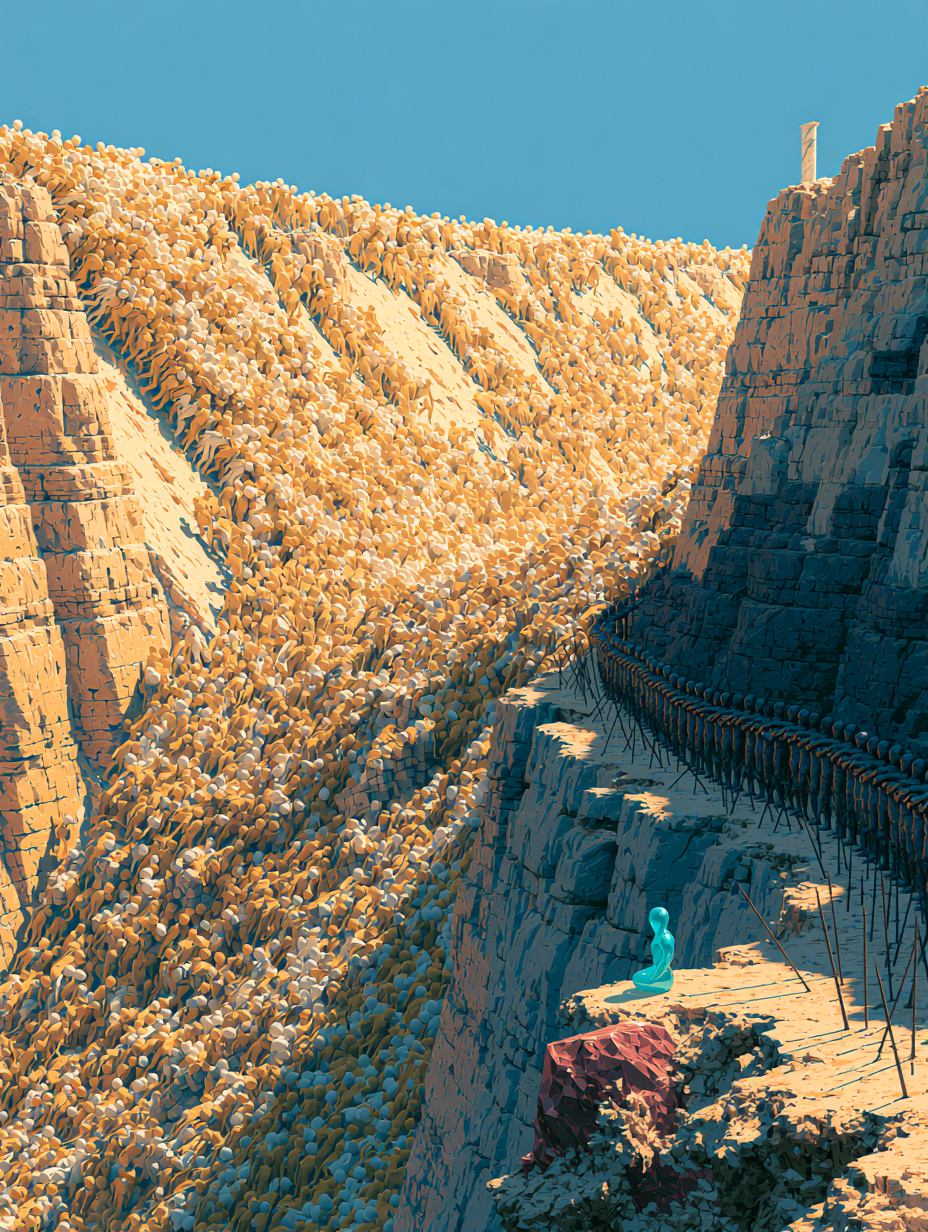
A death. A failed harvest. A child’s sudden illness. A fear loose in a community with nowhere to land and no way to be answered. And the human mind, which will not bear a frightening thing without a cause, begins to reach for a pattern, and then for a name, and then for a face to hang the name on.
Witch hunts are not medieval history. They are not behind us. They happen now, on every inhabited continent, and the modern body count exceeds the famous old one. In India alone, official records count more than two and a half thousand people, overwhelmingly women. Killed on the accusation of witchcraft in the first two decades of this century, and everyone who studies it agrees the real number is far higher because most cases are never recorded.
The studies of who gets accused tell the same story everywhere you look, across cultures that never touched one another. The accused is almost always a woman. She is usually older, often widowed. Often without sons or male protection. Very often from the lowest and least defended layer of the society. And with striking frequency the accusation arrives precisely when she holds something worth taking, a parcel of land, a house, a small inheritance that will pass. Once she is gone or driven out, these valuables go to the very people most active in accusing her.
A death or a misfortune occurs, the fear needs a target, a local figure of authority confirms the diagnosis. The crowd does the rest. Afterward the land changes hands.
Two patterns from this whole book fuse in the hunt, and seeing the fusion is the point. The seal supplies the accusation that cannot be tested: witchcraft, by its nature, leaves no evidence a fair court could weigh. So the accused cannot prove her innocence, and her very denial is folded in as further proof of guilt. And the fear supplies the engine: a real terror, a real dead child, handed a target whose removal promises that the terror has been dealt with.
The accused is the one the community can afford to lose.
That phrase is the cold center of it. Power flows downhill onto the person with the least standing to resist, and the flowing is dressed as justice, and the property moves quietly in the same direction as a reward to the accusers.
I am putting the hunt here, at the start of the mirror, for a specific reason.
Everything before this movement let you keep a comfortable distance, because the villains were kings and companies and agencies, the people in the room above you. The hunt removes that distance. The hunt has no kings in it. It runs on ordinary neighbors. On the pointing finger and the agreeing crowd and, most of all, on the people who said nothing because saying something was dangerous and the target was not them.
The hunt needs no enforcer. It is the structure operating directly through ordinary people. Each of whom goes home afterward feeling that something frightening was confronted and order was restored. It is the seal and the wall and the ladder, working without anyone at the top at all, which is why it is the truest mirror in the book.
And notice what is running underneath the property motive: fear that never releases. The village has suffered a real loss. The fear is genuine. The seal takes that genuine fear and alters its state. It transforms it from an analytical signal (this hurt us; let’s find the cause) into a permanent cage: the target is named, the target must be destroyed at all costs, and the case is closed.
The fear is not manufactured here. The conversion of it from signal into permanent accusation is. That conversion is the trap, and the person who provides the name for the fear, the local authority who confirms the diagnosis, is the person who benefits from the land.
The seal and the fear are doing each other’s work. The resolve to the hunt is documented and it is the subject of the very next post, so I will only name it here and let that post carry it: a hunt runs on an accusation that cannot be tested. Which means a hunt is broken at the exact moment someone with enough standing forces the test back into the room and the crowd is made to look at the fact that the evidence cannot be checked.
That is rare and it is costly and it has happened, and it is the one move that has reliably ended a hunt once a hunt has started. The deeper resolve is earlier than that, before the hunt begins: the community that has built, in calm times, the habit of demanding evidence and the collective standing that makes the demand survivable, is the community where the fear, when it comes, finds no untested accusation waiting to receive it.
You do not break a hunt alone in the moment of the crowd. You build, beforehand, with others, the floor of shared insistence on the testable that the hunt cannot easily tear up.
To the top of the ladder: when fear runs loose in the people below you, do you quietly let it find a target that happens to be convenient for you, and how much of what you call order is really just the blame flowing safely downhill, away from your door?
To everyone else: who is being hunted near you right now, by what untestable accusation, and where exactly are you standing in the crowd, the finger, the agreement, or the silence that lets it proceed?
Chapter Comments
Reading-only view here. Join or reply in the full forum thread: Open Discussion
No comments yet for this chapter.