
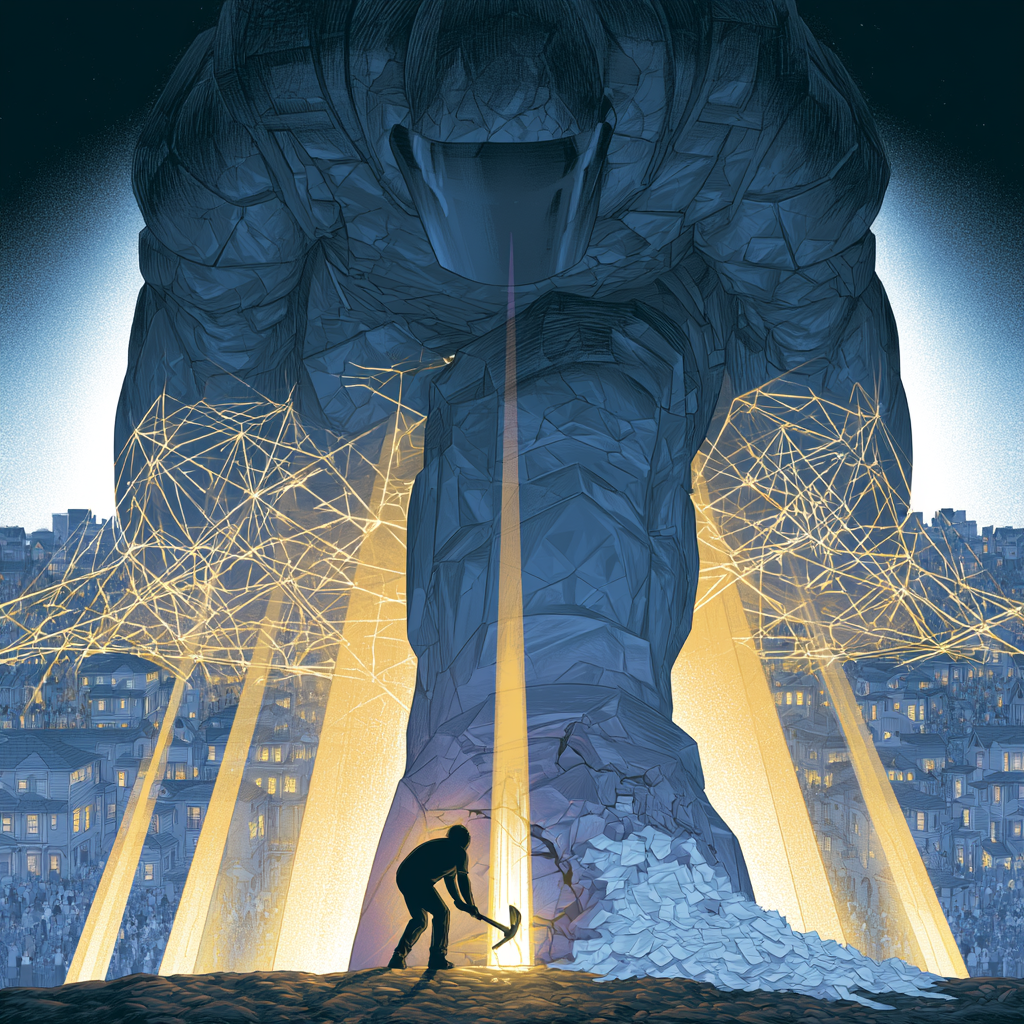
The enforcer removes friction abroad. But friction also arises at home, inside the host itself. Witnessed when the host's own citizens organize, march, and demand that the machine's arrangements be changed. The same instinct that removes a troublesome government overseas can be turned inward on the troublesome citizen.
In the American host it was in a program whose existence is no longer in dispute because the government itself was forced to investigate and condemn it.
For roughly two decades, the FBI ran a set of operations under the umbrella name COINTELPRO. Its purpose was to surveil, infiltrate, discredit, disrupt, and destroy domestic political movements. Targeting civil rights organizations, antiwar groups, black activist groups, and others the Bureau decided were dangerous. This was not passive watching.
Agents planted false documents, spread rumors to break up marriages and friendships, tried to get people fired, set rival groups against each other, and in at least one infamous case sent an anonymous letter to a major civil rights leader that was widely understood as an attempt to push him toward suicide.
The program ran in secret until 1971. That is when a small group of activists broke into a Bureau field office, took the files, and handed them to the press. Public outrage followed, and in 1975 a committee of the United States Senate, the Church Committee, investigated and laid the program out in the open. The committee's own final report described it, in plain institutional language, as a sophisticated vigilante operation aimed squarely at the exercise of the rights of free speech and association.
I want to slow down here, because this case is going to come back at the very end of the book, and it does two opposite things at once that you need to hold together. On one hand it is the bleakest possible confirmation of everything in this movement: the machine's enforcer, turned on the host's own people, treating citizens who used their basic rights as enemies to be neutralized. On the other hand, and this matters enormously, it is one of the clearest cases in the whole book of the structure being caught, named, and forced to stop.
The break-in. The free press that printed what the break-in found. The Congress that, however reluctantly, convened and investigated and published. The reforms that followed. This is friction working. It is rarer than it should be, it came after enormous harm had already been done, and the reforms have eroded since.
But it happened. It is documented. It is not nothing. Keep both halves.
The enforcer turned inward, and the structure's own correction machinery catching it. The book will need both before it is done.
To the top of the ladder: which of the people exercising their plainest rights have you reclassified as threats, so that watching them, breaking them, neutralizing them, could feel like security rather than what it is?
To everyone else: what did it take, in the end, to drag the watching into the light, and are you willing to be the break-in, the press, the inconvenient committee, knowing the cost lands long before the vindication does?
Chapter Comments
Reading-only view here. Join or reply in the full forum thread: Open Discussion
No comments yet for this chapter.